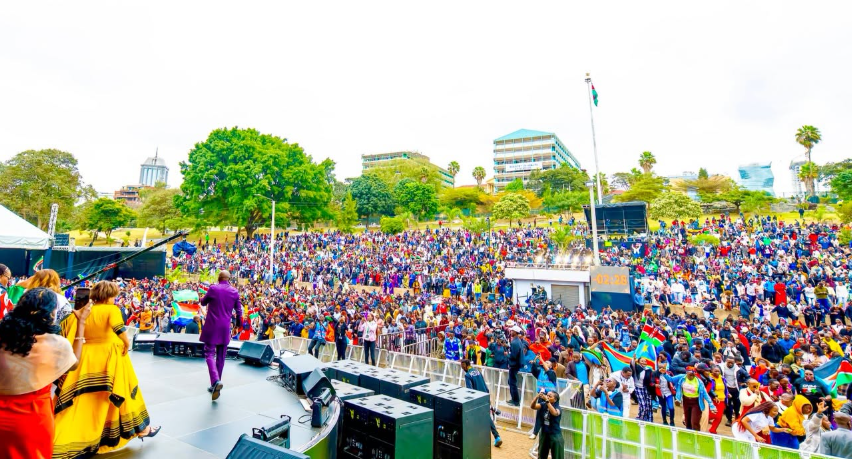
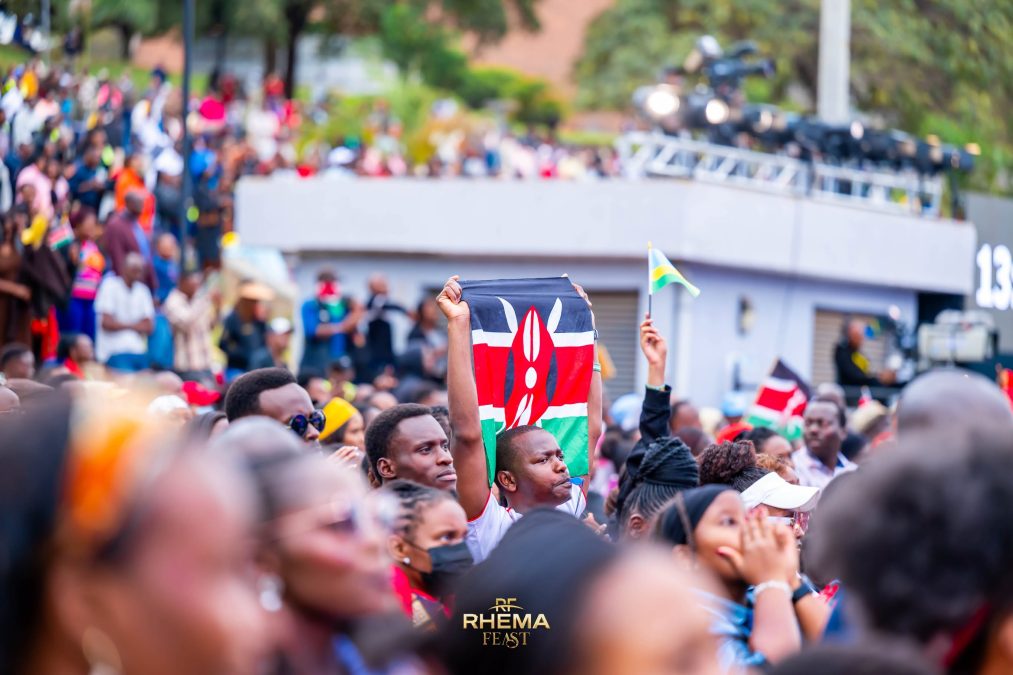
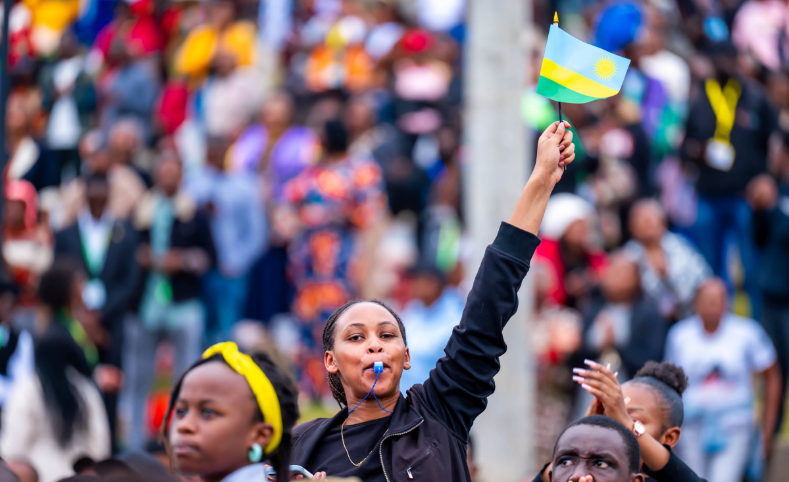
From 31 August to 4 September 2026, Uhuru Park in Nairobi's CBD became the convergence point for one of the largest Christian gatherings East Africa has seen. Rhema Feast 2026 — also widely searched as Rhema Fest — drew tens of thousands of worshippers from Kenya and across the continent, brought in international speakers and gospel artists from Nigeria, Uganda, Rwanda and South Africa, and livestreamed to a global audience over five days under the theme Come, Let Us Rebuild.
As a production company that works with large-scale live events and broadcasts across East Africa, we watched Rhema Feast 2026 closely — not just as spectators, but as production professionals. What follows is our honest read of what the production team got right, where the challenges are inherent to a venue like Uhuru Park, and what a next edition could do differently to raise the standard.
This is not a criticism. It is the kind of review we wish existed for every major event in Kenya — because the industry grows when we talk openly about what works and what does not.
The scale was the statement
Before anything else, credit where it is due: the logistical achievement of Rhema Feast 2026 was significant. Coordinating speakers and gospel artists from six or more countries — including Apostle Joshua Selman, Sinach and Dunsin Oyekan from Nigeria, Dr. Tumi and Ntokozo Mbambo from South Africa, Apostle Grace Lubega from Uganda, and Apostle Mignonne Kabera from Rwanda — is a production task in itself before a single speaker stands at a microphone.
The stage, screens, and sound rig at Uhuru Park were visible across the park. The main stage build was substantial enough to hold multiple international acts across five consecutive days — each with different technical riders, different in-ear monitor preferences, different lighting cues. Getting that coordination right, night after night, is harder than it looks from the crowd.
What the production got right
1. Livestream reach was the right call. Making the event available free on YouTube and Facebook was strategically and technically correct. A worship event of this kind derives much of its cultural authority from perceived scale — and putting the cameras in front of a crowd that large, broadcast to a global audience, is exactly how you build the narrative of Kenya as a continental spiritual hub. The livestream was not an afterthought. It was part of the event's identity.
2. The multi-day format sustained energy across the programme. Five days is ambitious. Most event productions in Kenya struggle to maintain consistent technical quality across more than two days — fatigue sets in for crew, equipment behaves differently in sustained outdoor conditions, and the programme inevitably runs long on some sessions. Rhema Feast held its production quality across all five evenings, which says something positive about the crew management.
3. The Business Forum integration was smart programming. Adding the Business Forum on September 4 — with speaker Seyi Ebenezer, founder of Payaza Africa, among others — extended the content into leadership and enterprise territory. From a production standpoint, this also means a more intimate, conference-style setup within the broader outdoor rig, which is a different technical challenge handled well.
4. The atmosphere lighting created iconic imagery. The image of tens of thousands of phone torches lit up across Uhuru Park as Apostle Joshua Selman took the stage is one of the most shared images from the event. That moment was as much a production decision as it was a spiritual one — the lighting direction cued the crowd response. That is excellent event production instinct.
"The image of tens of thousands of phone torches lit across Uhuru Park is one of the most shared from the event. That moment was as much a production decision as a spiritual one."
The honest challenges: what Uhuru Park costs you
Uhuru Park is a powerful venue for the right reasons — it is central, it is iconic, and it is large enough to hold a continental gathering. But it offers almost nothing in terms of production infrastructure, and every production company that has worked there knows this.
There is no house power adequate for a production rig of this size. Every kilowatt of electricity for the stage, screens, sound system, lighting rigs, backstage monitoring, and livestream truck runs off generators — which means diesel cost, noise management, and the constant risk of a generator failure during a live session. That adds materially to the production budget and creates a single point of failure that well-resourced events should plan around with redundant generator feeds and automatic transfer switches.
There are no rigging points. The lighting and speaker arrays had to be ground-stacked or flown from temporary structures trucked in. Ground-stacked line arrays are less directional than flown arrays, which means sound pressure drops faster as you move toward the back of the crowd — and in a crowd of this size, the difference between front and back of house is measured in tens of thousands of people. Proper line array placement is the difference between an event that sounds excellent at the back and one that sounds excellent only at the front.
There is no covered shelter. Five consecutive outdoor evenings in Nairobi in late August and early September means the production team is living with weather risk every single day. Equipment under open sky across those conditions requires weatherproofing that adds cost — and a single hard rain during a live session is a safety and technical crisis. The next edition should have contingency shelter designed into the stage structure from the start.
What the next edition should do differently
Broadcast lighting should be separated from atmosphere lighting. The phone-torch moment was beautiful. But broadcast lighting for a speaker — especially one being delivered to a national television audience and a global livestream — needs to be different from the lighting that creates atmosphere for the crowd. Key lights that are too cool or too diffuse make preachers look underexposed on camera, even when they look dramatic in person. The next Rhema Feast should have a dedicated broadcast lighting designer working alongside the atmosphere LD, with camera operators setting exposure on the feed independently of the live show look.
The livestream deserves a dedicated production truck. Broadcasting free on YouTube and Facebook is the right strategy. But the production quality of a livestream is determined by how many camera angles you have, how clean your vision mixing is, and whether your stream is running through a proper broadcast workflow or a consumer-grade encoder. An event of this size and international significance should have a dedicated broadcast production unit — multi-camera, mixed in a truck, with a dedicated stream engineer — rather than a web camera with a capture card. The difference in watchability for the global audience is enormous.
Post-event content is the biggest missed opportunity. Five days of powerful sessions with international speakers of the calibre of Joshua Selman, Poju Oyemade, and Grace Lubega — and the vast majority of that content either disappears or goes out as raw, unedited footage. The Rhema Feast brand would benefit enormously from professional post-production: properly colour-graded sermon series, highlight reels per session, a documentary of the five days, speaker clips cut for social media. This content can keep the event alive for months after it ends and build the audience for the next edition. This is exactly what documentary and impact film production does for organisations whose work deserves to be seen beyond the room it happened in.
Planning a large-scale live event or faith gathering? Let's talk about what the production should look like.
Book a Discovery Call →Sound distribution for a crowd of this scale needs zoning. A single FOH (front-of-house) position at the mixing desk means the engineer is optimising for one position in a crowd that spans hundreds of metres. Large outdoor events at this scale benefit from delay towers — additional speaker clusters positioned through the crowd that keep sound levels consistent from front to back without having to push the front speakers to damaging volumes. This is standard practice at stadium concerts and large outdoor festivals globally. It is the right investment for a gathering of Rhema Feast's size.
The Business Forum deserves its own production identity. The Advance Tickets at KSh 10,000 and walk-in at KSh 15,000 signal a premium audience. That audience expects a different production quality than the open worship sessions — higher quality AV, better broadcast, professional event branding, and a room that feels like a world-class business conference rather than a marquee attached to a worship stage. Separating the production identity of the Forum from the wider event would elevate both.
The bottom line on Rhema Feast 2026
Rhema Feast 2026 — widely referred to as Rhema Fest online — was a landmark event for Kenya and for the continent. It confirmed what many in the events industry already know: Nairobi is becoming the capital of African Christian movement, and events of this scale and international profile will only grow.
The production was strong enough to pull it off. What comes next — if Rhema Feast continues to scale — is the discipline to professionalise every layer: broadcast, post-production, sound infrastructure, weather contingency, and the long-form content strategy that turns a five-day event into a 365-day presence.
The room was filled. Now it is time to make sure the story of what happened inside it reaches everyone who was not there — and builds the case for the next edition to be even larger.
Sources: rhemafeast.org · K24 Digital · Capital FM Kenya · The Star Kenya